
Science doesn’t prove anything. Not really.
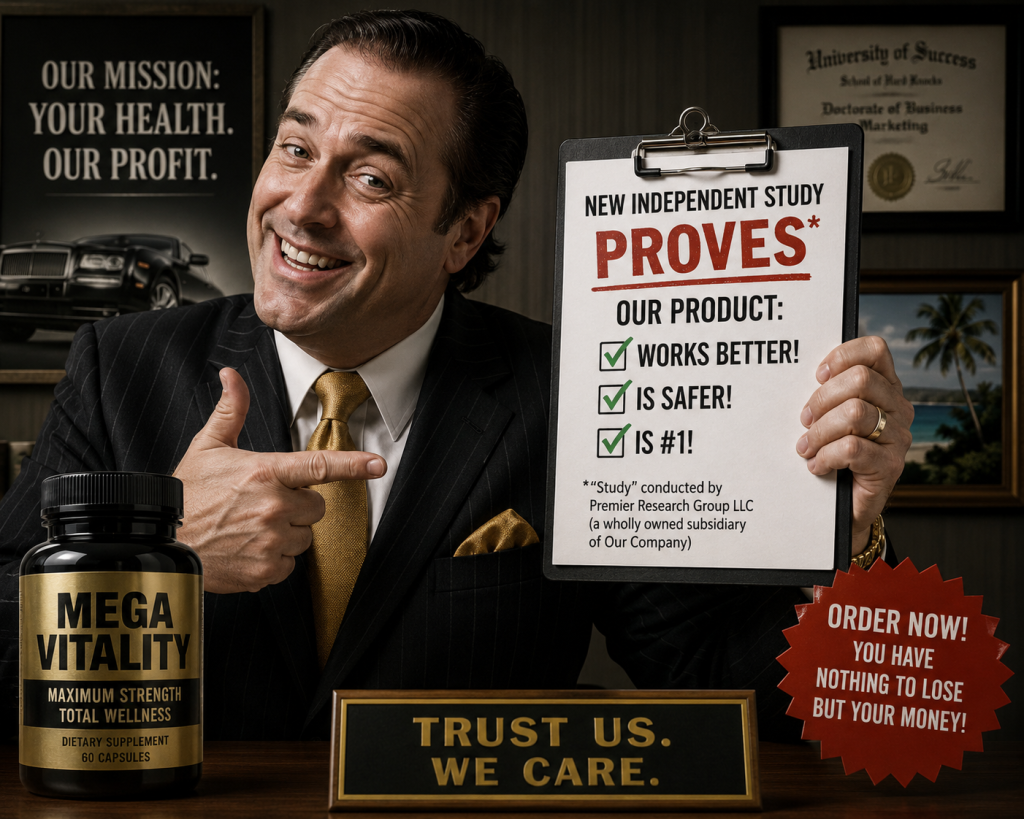
This sounds strange at first. We hear people say things like “science has proven evolution” or “studies prove climate change.” We also hear commercials and news reports claim “clinical trials prove that [drug] works.” Scientists know better. But too often, companies know this truth and use the word “prove” anyway to sell you something. They treat science like a marketing slogan, not a method of discovery.
The Trap of “Clinical Trials Prove”
When a drug company says “clinical trials prove that” their medicine works, they are usually stretching the truth. They mean the trials showed results strong enough to get regulatory approval or to stop competitors from launching. They do not mean they have found absolute, unbreakable truth.
If scientists spoke with integrity, they would say: “The data suggests this treatment is effective for most people in this group.” Instead, companies shout: “PROVEN.” Why? Because “proven” sells. It shuts down questions. It makes you feel safe. It stops you from asking about side effects, rare failures, or what happens five years later.
This isn’t just sloppy language. It’s a deliberate tactic. By using the word “prove,” these companies hide the uncertainty that defines real science. They pretend the job is done. But science never finishes. A drug might work great for thousands of trial participants but fail catastrophically in one specific genetic subgroup the trial didn’t catch. Or it might cause heart issues only after ten years of use. The company can’t know all that yet. But if they say “prove,” they act like they do.
Evidence Builds Walls, Not Fortresses
Think of scientific evidence like building a wall. Every new study adds another brick. When you have a few bricks, the wall is weak. Wind blows it over easily. When you stack a thousand bricks, the wall stands tall. It looks solid. It feels permanent.
But no matter how many bricks you stack, you haven’t built an indestructible fortress. You can still knock the wall down with a sledgehammer, or maybe a new type of wind comes along that you didn’t expect. That is how science works. It builds confidence, not certainty.
Companies that say “prove” ignore the sledgehammer. They tell you the wall will never fall. They want you to believe the job is finished so you stop worrying and start paying.
Testing Means Trying to Break Things
Real science asks: “How could I be wrong?” Then it tries to break its own idea. If the idea survives the attempt, we trust it a little more. If it breaks, we fix it. This process keeps us honest.
Marketing uses a different approach. It asks: “How can I show I am right?” It cherry-picks the data that looks good. It hides the studies where the drug failed. It ignores the patients who got sick. When a company says “clinical trials prove,” they are often telling you about the one test that worked while pretending the others don’t exist.
This is dangerous. It makes us think we understand risks better than we actually do. It tricks us into trusting products we shouldn’t. And when the product fails later, the company can say, “Well, the trials were correct for those people.” They twist the meaning of “correct” to save their reputation.
Predictions Are Better Than Promises
The best scientific ideas make predictions. They say: “If we do X, Y will happen.” If Y happens, confidence grows. If Y doesn’t happen, the theory changes.
Predictions force honesty. You can predict tomorrow’s weather and be wrong. You can predict a chemical reaction and miss a detail. Being wrong teaches you something. Being “proven” teaches you nothing. It just gives you a false sense of security.
When companies claim to have “proven” their product works, they stop making predictions. They stop saying, “We think this will help you.” They say, “It WILL help you.” That shift turns science into a sales pitch. And sales pitches lie by omission.
The Cost of False Certainty
Why does this word matter? Because it shapes behavior. If a doctor thinks a drug is “proven,” they prescribe it without checking for contraindications. If a patient thinks a diet pill is “proven,” they skip healthy habits and rely on the pill. If a regulator thinks a safety standard is “proven,” they stop watching for new hazards.
False certainty kills progress. It stops us from looking for better answers. It traps us in outdated methods because “we already proved this works.” Meanwhile, the world changes, new threats appear, and old solutions fail.
So What Do Scientists Say?
Honest scientists avoid the trap. They use careful words:
- “The evidence suggests…”
- “Current models indicate…”
- “Observations support…”
- “Results demonstrate efficacy under these conditions…”
- “We have high confidence…”
They never say “proven.” Because nothing sits beyond question forever.
Hold Companies Accountable
Next time you hear “clinical trials prove,” stop and ask: What did they actually find? Did they test everyone? Did they look long enough? What if the next batch of data shows a problem? Is there a financial incentive going on here?
Don’t let a marketing department decide how you understand reality. Demand better language. Force them to admit uncertainty. That is the only way to protect ourselves from bad science disguised as fact.
Science builds useful knowledge. It helps us cure diseases, build bridges, land on moons, and protect ourselves from harm. It does all this without claiming absolute truth.
That is its strength. And companies that try to steal that strength by lying about “proof” are the ones who should fear the consequences.
Please read our disclaimer on our home page.